
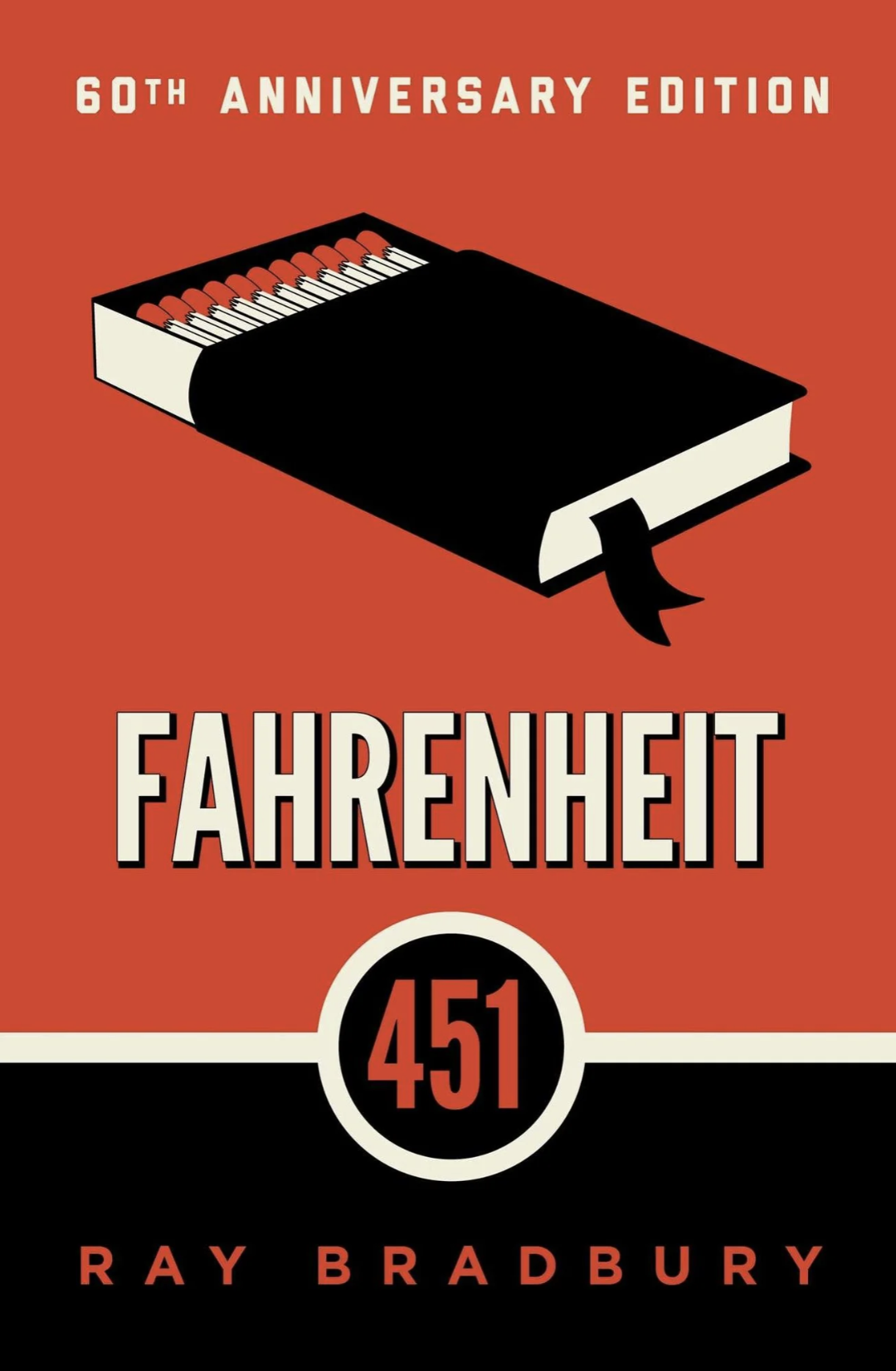
“You weren’t there, you didn’t see,” he said. “There must be something in books, things we can’t imagine, to make a woman stay in a burning house; there must be something there. You don’t stay for nothing.”
Guy Montag, Fahrenheit 451 (p. 48).
I love books. And I own a lot of them. I lost count of how many I owned when my library surpassed 1,000. That doesn't count the hundreds, if not thousands, of children's and young adult books we own. Books and reading play a major role in my life and that of my family. I love books because they are opportunities to learn, grow, and explore. They present facts and data. They share history. They spark the imagination. They inspire curiosity and wonder.
I also love books because they are anchored to times, places, and experiences. When I pick up a book from my shelf, I am reminded of when I first read it or when I last picked it up. The wear on the spine, the notes in the margins, even the smell of the pages transport me back to previous experiences. This helps me remember the book and its impact, beyond just the content of its pages.
Moreover, I love books because they are communal. They can be overtly communal, as when I read to my children in the evening or when we gather for a book club. They are more subtly communal when I share what I’m reading with a friend or connect with someone over a book we both enjoyed. But books offer another level of communality when we read texts enjoyed throughout the ages. When we read an ancient text like The Odyssey, we are engaging with a work that has been discussed, pondered, and shared for 2,800 years. In doing so, we step into an ongoing conversation with people who lived and died long before we were born. We are communing with our forebears.
Fahrenheit 451 — our One School, One Book selection for the 2026-27 school year — explores the role that books play in society and culture, and what happens when we neglect them for the sake of non-stop entertainment. Yes, books can be challenging. Sometimes the writing style itself makes them hard to follow. Sometimes it’s the content. Sometimes it’s our own laziness, exhaustion, or distraction that’s to blame. Whatever the cause, people are reading less [1][2]. While some question whether this is problematic or just a step in the human story, we should consider what Bradbury has to say [3]. For the loss of reading just might be the loss of culture.
With that in mind, I hope you’ll read Fahrenheit 451 along with us this year. And please consider joining a discussion group. These are great opportunities to get to know one another, and to lean into the communal aspect of books.
[1] https://worldliteracyfoundation.org/teens-are-reading-less-screens-arent-the-whole-story/
[2]https://apnews.com/article/books-reading-high-school-english-class-c8d9f39773268a6e8c79cb0b3c78d3c1
[3]https://www.theatlantic.com/magazine/2026/08/reading-crisis-postliterate-age/687618/